
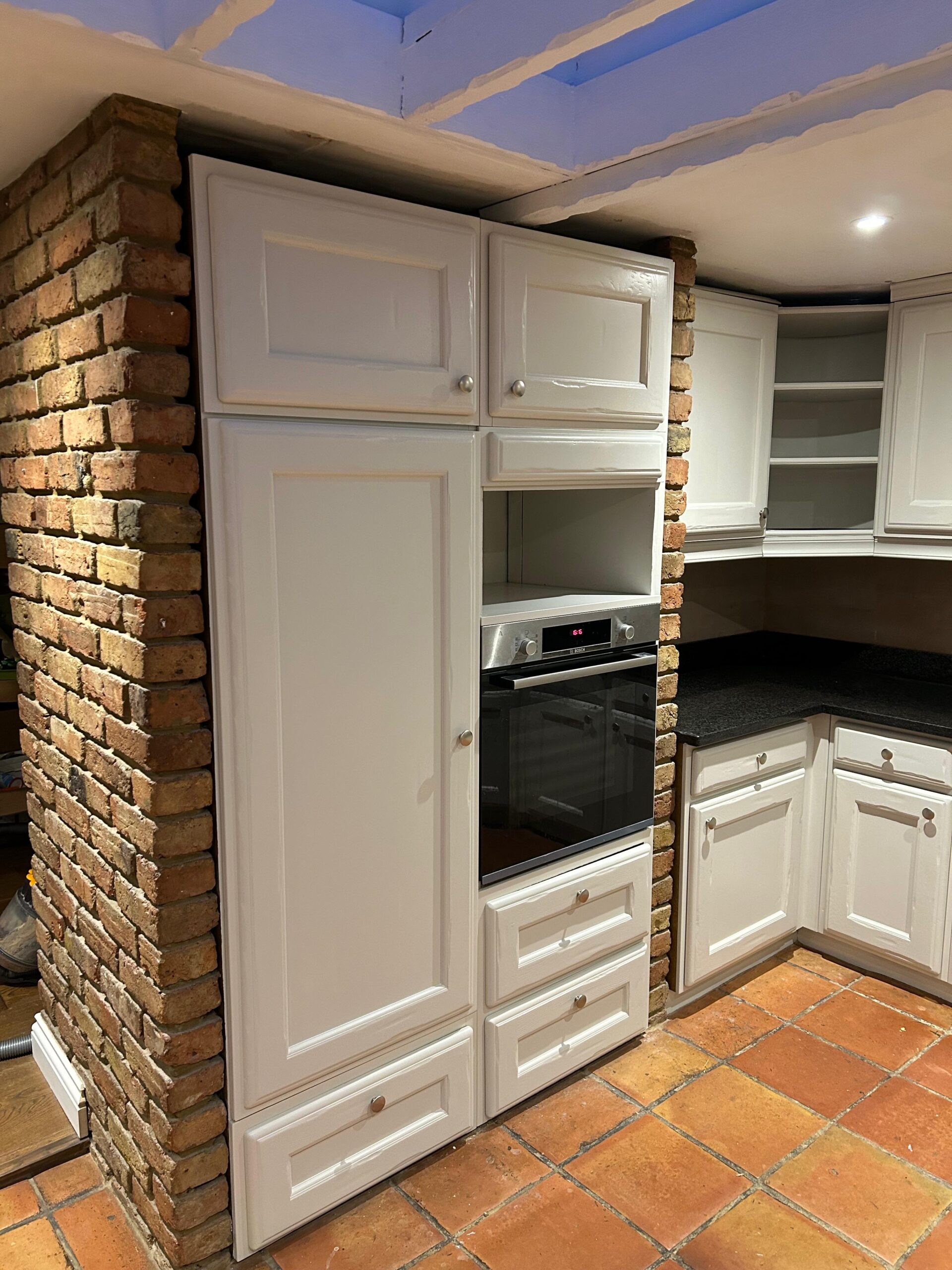
Homeowners in Chatham can update a dated kitchen without the expense, waste and upheaval of a full refit. Kitchen Respraying in Chatham gives sound cabinet doors, drawer fronts and visible panels a clean new colour and a smooth, durable finish. It is a practical option where the layout still works, the units are structurally solid and the aim is to create a more considered look rather than start again from scratch.
What Kitchen Respraying in Chatham Involves
Professional respraying is much more than applying paint to cupboards. The process starts with assessing the condition of the doors, cabinets and surrounding trim. Hinges, loose edges, chips, grease build-up and previous coatings all affect the preparation required. Doors and drawer fronts are usually removed where practical, while fixed sections are carefully protected and prepared in place. This allows the kitchen to retain its familiar layout while its appearance is transformed.
Preparation is the foundation of a long-lasting result. Surfaces are cleaned, degreased, repaired where needed and sanded to create a suitable key. Handles can be removed or replaced, and openings, worktops, appliances and adjacent areas are masked thoroughly. Specialist primer and topcoat systems are then sprayed in controlled coats, producing an even finish without the brush marks commonly associated with DIY painting. The aim is a refined, factory-quality appearance that suits everyday use.
Why Choose Kitchen Respraying in Chatham Rather Than Replacement?
Replacing a kitchen can involve removing cabinets, altering plumbing or electrics, fitting new worktops and managing several trades. If your existing units are well built and the storage arrangement works for your household, respraying can avoid much of that disruption. It also keeps usable materials in service rather than sending cabinets to waste simply because their colour or style no longer suits the room.
The cost can be easier to manage too, particularly for kitchens with solid cabinet carcasses but tired doors. A respray gives you freedom to choose a contemporary neutral, a deep statement shade or a colour matched to a sample, without being limited to an off-the-shelf door range. It is worth remembering that respraying cannot correct swollen chipboard, badly water-damaged panels or cabinets that are no longer secure; an honest assessment helps establish whether it is the right route.
Planning Kitchen Respraying in Chatham for the Best Result
Before choosing a colour, consider the parts of the kitchen that will remain. Worktops, tiles, flooring, wall paint, handles and lighting all influence how a shade will read. Small samples can appear very different across a whole bank of cupboards, especially in north-facing rooms or kitchens with warm artificial lighting. A softer neutral may make a compact room feel calmer, while a darker finish can add definition if there is sufficient natural light and contrast elsewhere.
Think about practical details at the same time. New handles may need different hole positions, so these should be agreed before spraying. If you are changing the worktop later, choose the cabinet colour with the final material in mind. Allow for access around the kitchen during the work and for appropriate curing time before heavy use. Good planning reduces last-minute decisions and helps the finished room feel cohesive.
Colour, Finish and Safe Working Practices
A bespoke approach makes it easier to update cabinets around existing décor or furniture. Digital colour scanning can help match a chosen reference, while sheen level affects the final character: lower sheens tend to look understated, whereas satin finishes reflect more light and can highlight the shape of traditional door profiles. For Kitchen Respraying in Chatham, choosing high-performance specialist coatings is particularly valuable around handles, sink areas and frequently opened doors, where domestic wear is greatest.
Safe preparation and application matter as much as colour. Coatings, solvents and dust need suitable controls, ventilation and handling procedures. The HSE’s Control of Substances Hazardous to Health (COSHH) guidance explains employers’ duties to assess hazardous substances and prevent or adequately control exposure. For homeowners, this is a useful reminder to use a professional process that protects the work area and avoids treating spray finishing as a simple indoor painting job.
Frequently Asked Questions
How long does a kitchen respray take?
The timescale depends on the kitchen’s size, condition, number of doors and level of preparation needed. An inspection and clear schedule will provide the most reliable indication, including when the kitchen can return to normal use.
Can laminate and MDF doors be sprayed?
Many laminate and MDF surfaces can be refinished successfully after correct cleaning, sanding and priming. Their condition must be checked first, as lifting edges, deep damage or moisture swelling may need repair or replacement.
Will the new finish withstand daily cleaning?
Professional coating systems are selected for durability, but gentle care still matters. Use a soft cloth and mild cleaner, avoid abrasive pads and allow the coating to cure fully before intensive cleaning or fitting handles.
Do I need to empty all my kitchen cupboards?
Requirements vary according to which areas are being sprayed and how they are accessed. Clearing worktops and nearby items is usually sensible, while a survey can confirm whether cupboard contents need moving.
If your cabinets are in good condition but the room no longer reflects your taste, Kitchen Respraying in Chatham could be a cost-conscious alternative to replacement. Renewing Ltd — Kitchen Sprayers of Kent provides professional kitchen and furniture spraying, including tailored colour matching and careful refinishing for homes across Kent. Arrange an assessment to discuss your kitchen, preferred finish and the most suitable way to renew it.